
What is Indigenous Science?
An Introduction to Indigenous STEM and Sustainability
Many people today ask: What is Indigenous science?
Some people may wonder whether Indigenous science even exists, and I even once wondered the same thing. After years of post-secondary school studying science, I graduated with degrees in biochemistry and environmental science, believing I had become a well-rounded scientist. Yet during my entire academic journey, I had never once heard the term “Indigenous science,” let alone explored it. Only later did I realize something important: I had not been trained in science broadly, but in Western science specifically. Through reconnecting with my Anishinaabe heritage, I found out that Indigenous science not only exists, but in many ways is just as powerful as Western science.
This realization raised an important question for me and likely the person reading this: What is Indigenous science?

W
To answer this, we must first gain a brief understanding of what science is. Science is the discipline that asks and attempts to answer questions about natural phenomena, whether biological, chemical, physical, or astronomical in nature. Importantly, the knowledge produced through science must be reproducible so that other scientists can observe and confirm the same results. The insights gained through science are applied to develop new technologies and engineering solutions. These innovations have led to the many positive aspects of modern society that we enjoy today. The language used to describe and make sense of the natural world, and to apply scientific knowledge, is mathematics. For this reason, the acronym STEM (Science, Technology, Engineering, and Mathematics) is commonly used to describe the connected disciplines that help us to understand the natural world and apply that understanding in innovative and helpful ways.
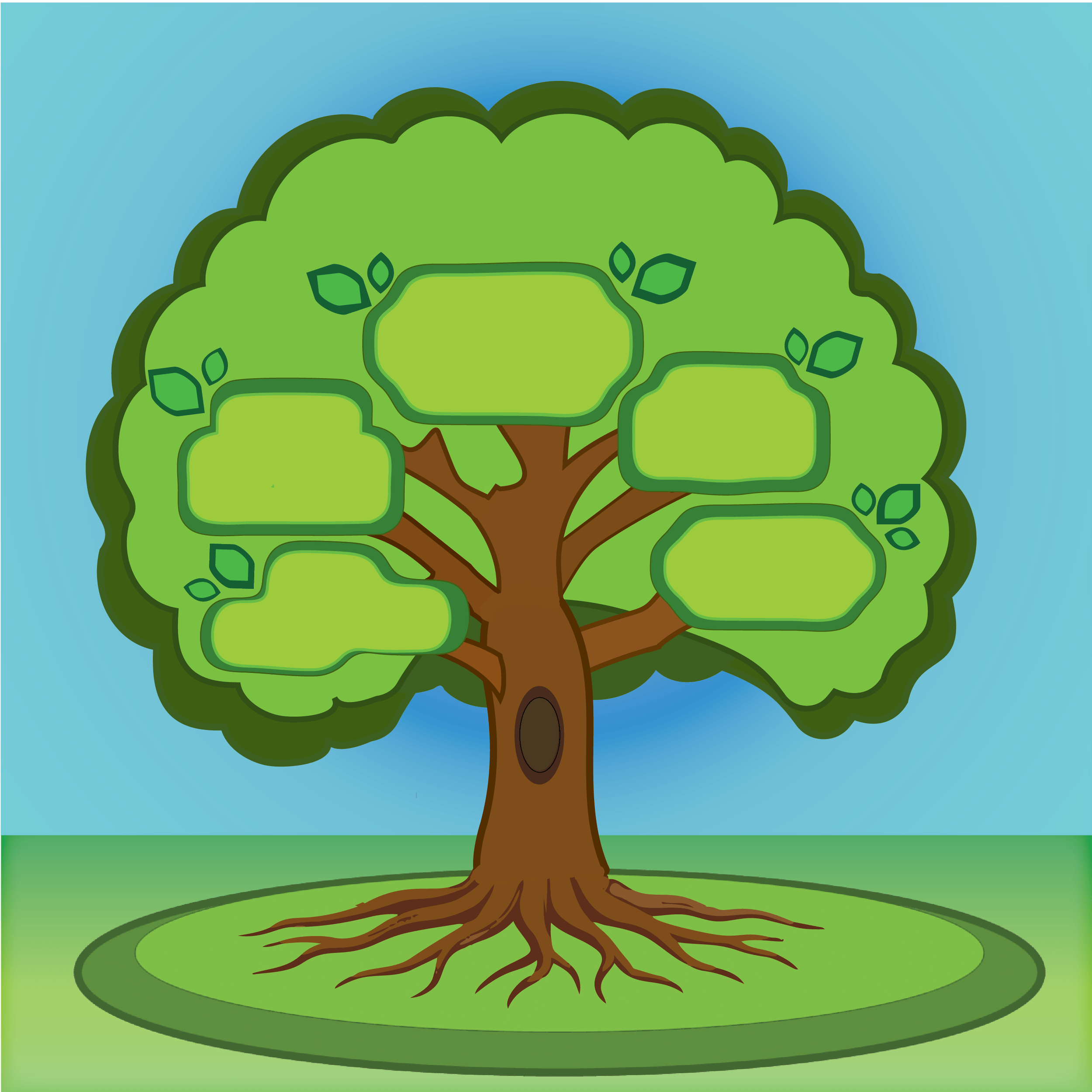
The Tree of Understanding What Informs Indigenous Science
However, what is today simply referred to as “science” should be more accurately referred to as Western or European science. Western science unsurprisingly originated in Europe and was shaped by Western philosophies, ideologies, and epistemologies. Although the goal of science is total objectivity, biases are introduced because of those philosophies, ideologies, and epistemologies. As scientists, it is important to learn about and recognize these biases so that they can be avoided or mitigated altogether.
Over time, this form of science has spread and become the most widely adopted, being taught and practiced worldwide. As a global human society, we owe a lot to science and the hardworking scientists who have dedicated their lives to answering questions about nature for generations. Without them, we wouldn't enjoy many modern luxuries, like the computer I’m using to write this blog. In fact, my first passion was science, and my career aspirations were to teach science.
However, while Western science has become cosmopolitan in application and education, it is not the only way that human societies have studied and understood the natural world. Every culture on Earth has asked questions about the natural world and developed ways of understanding the phenomena they observed. In that sense, science is not owned by any one culture, and perhaps if we take the time to learn other forms of science, we can further contribute to understanding Nature and all that encompasses it.
For example, Indigenous Peoples of North America developed sophisticated systems of knowledge grounded in thousands of years, and hundreds of generations of observation, experimentation, and relationship with the lands and waters they lived on. This is Indigenous science, which, over the years, is what I have come to learn and understand. Now my goal is to teach others about what I have learned, and encourage both scientists and educators to engage in this very meaningful discipline.
To define Indigenous science and understand how it compares with Western science, it is important to explore the concepts that inform it; for this, we will build a tree of understanding Indigenous science, adding concepts to this tree as the story unfolds.
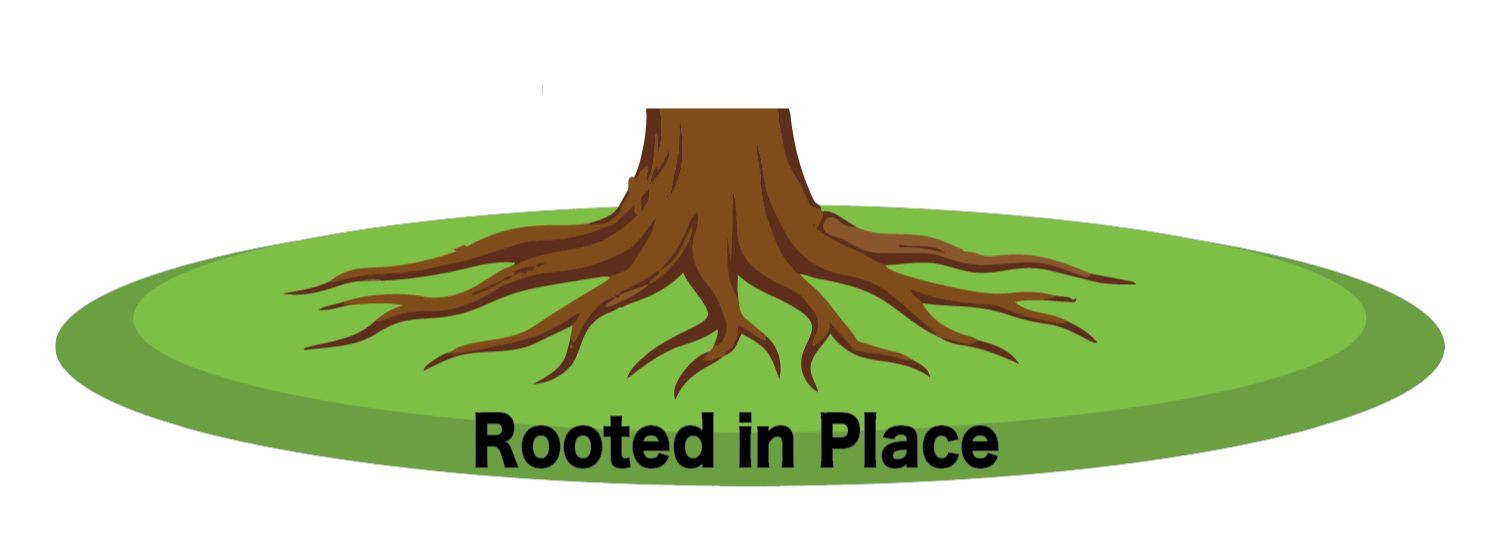
Rooted In Place
First and foremost, Indigenous science is rooted in place. Much like Indigenous languages and perspectives, Indigenous science emerges from the land herself. The land, the waters, the sky, and all the beings who live within these environments inform and shape Indigenous knowledge. While Western science is cosmopolitan in its application, Indigenous science is local. That's not a deficit, but rather a strength, and a difference between Western and Indigenous science. If anyone wants to learn more about a specific environment, or the beings of that environment, who better to ask than the people who have lived alongside those beings for generations?
Indigenous science is also not simply about studying these beings in the same way Western science might. It is about learning from them. When Indigenous Peoples speak of land-based learning, they mean it quite literally. It means learning from the land, the waters, the plants, the animals, the winds, and the stars that surround us. It means observing how these beings live, how they relate to one another, and understanding the roles they play within the world. Through these observations, we come to understand what many Indigenous Peoples refer to as Natural Law.
Natural Law
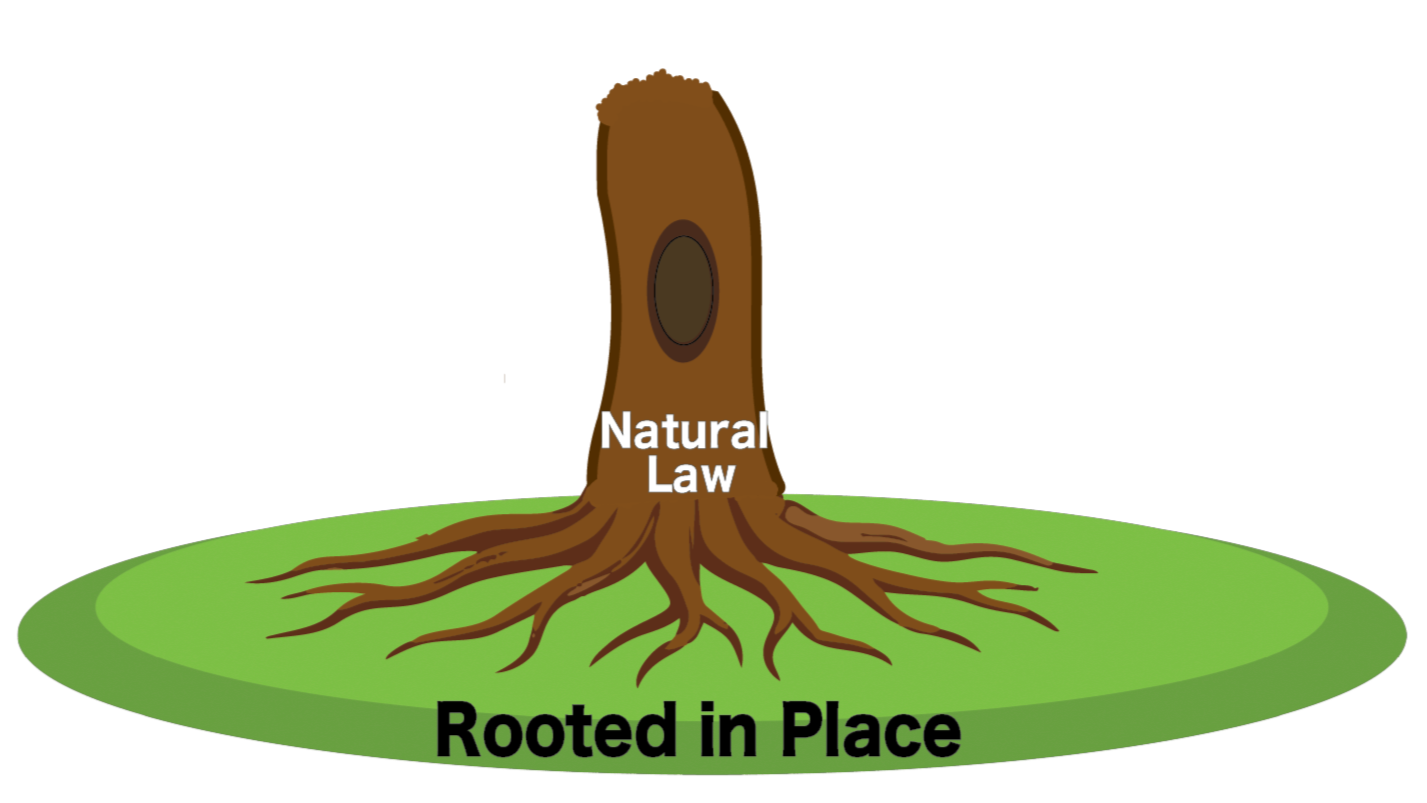
Every being (species) within the environment has a role and responsibility (ecological niche), and a part to play within their community (ecological relationship). These are the original instructions that these beings follow, which are understood to have developed through their relationship with other beings within their environment (evolutionary origin). The Anishinaabe and many other Indigenous Peoples refer to this understanding as Natural Law. This living knowledge system is revealed through direct interaction, engagement, observation, and listening and learning from nature. Indigenous science is not only about understanding how ecosystems function, but also about understanding how humans are meant to live within those systems, how humans are meant to share the land with all the beings of those systems, all with a good relationship.
Relationship
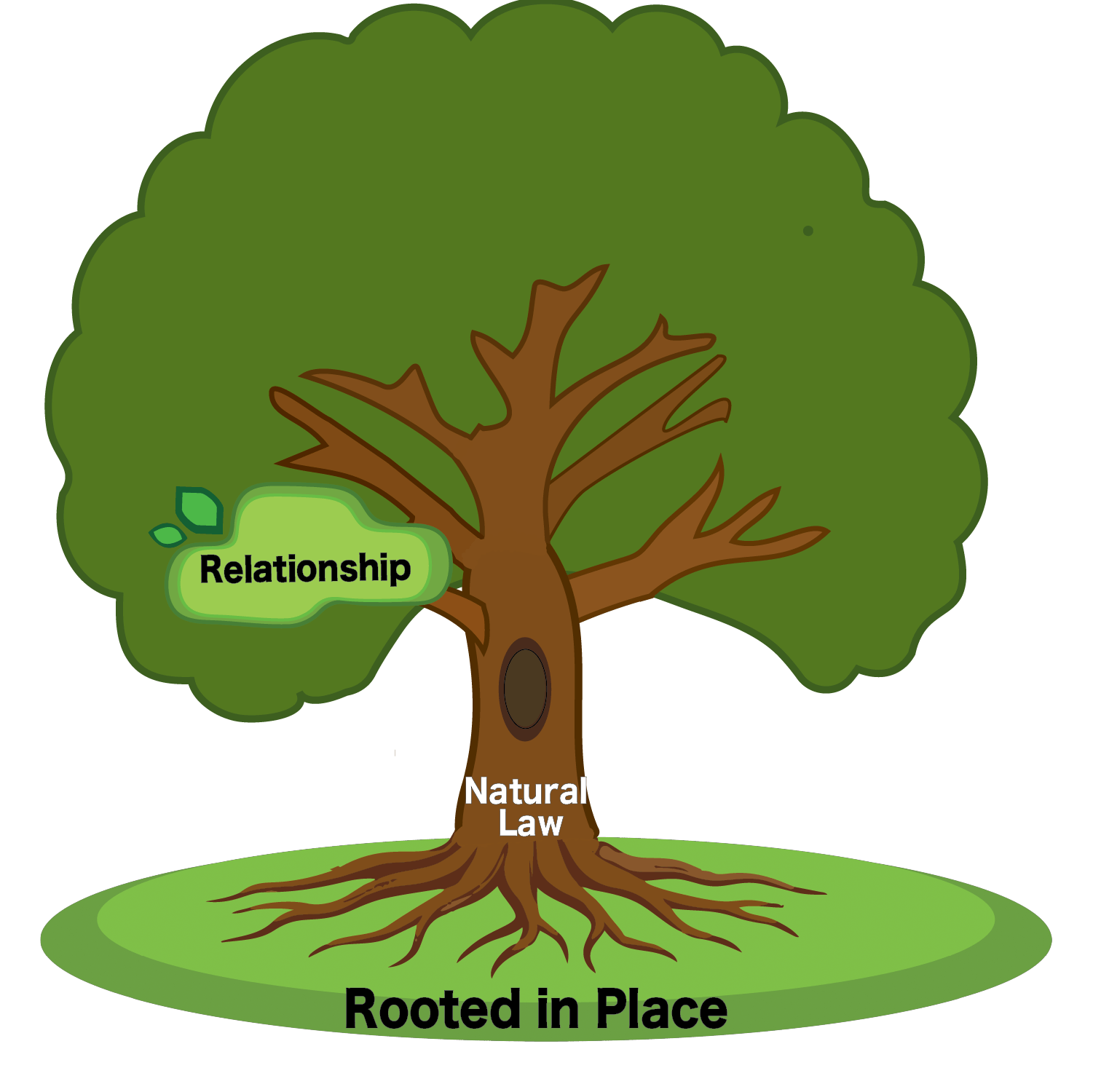
Relationship is truly the heart of Indigenous science. Western science does concern itself with the relationships between beings and their environments, but not so much with our relationship with these beings. This becomes one of the most profound differences between Indigenous and Western science, as relationship informs environmental practice and how knowledge is acquired. When beings are studied, they are not thought of as objects of observation; they are our kin, our family. Equal but different forms of life. How we view, speak of, relate to, and research these beings is just as important as what we learn from them. Knowledge is not separate from relationship; it grows out of relationship. These relationships must also be reciprocal.
Reciprocal
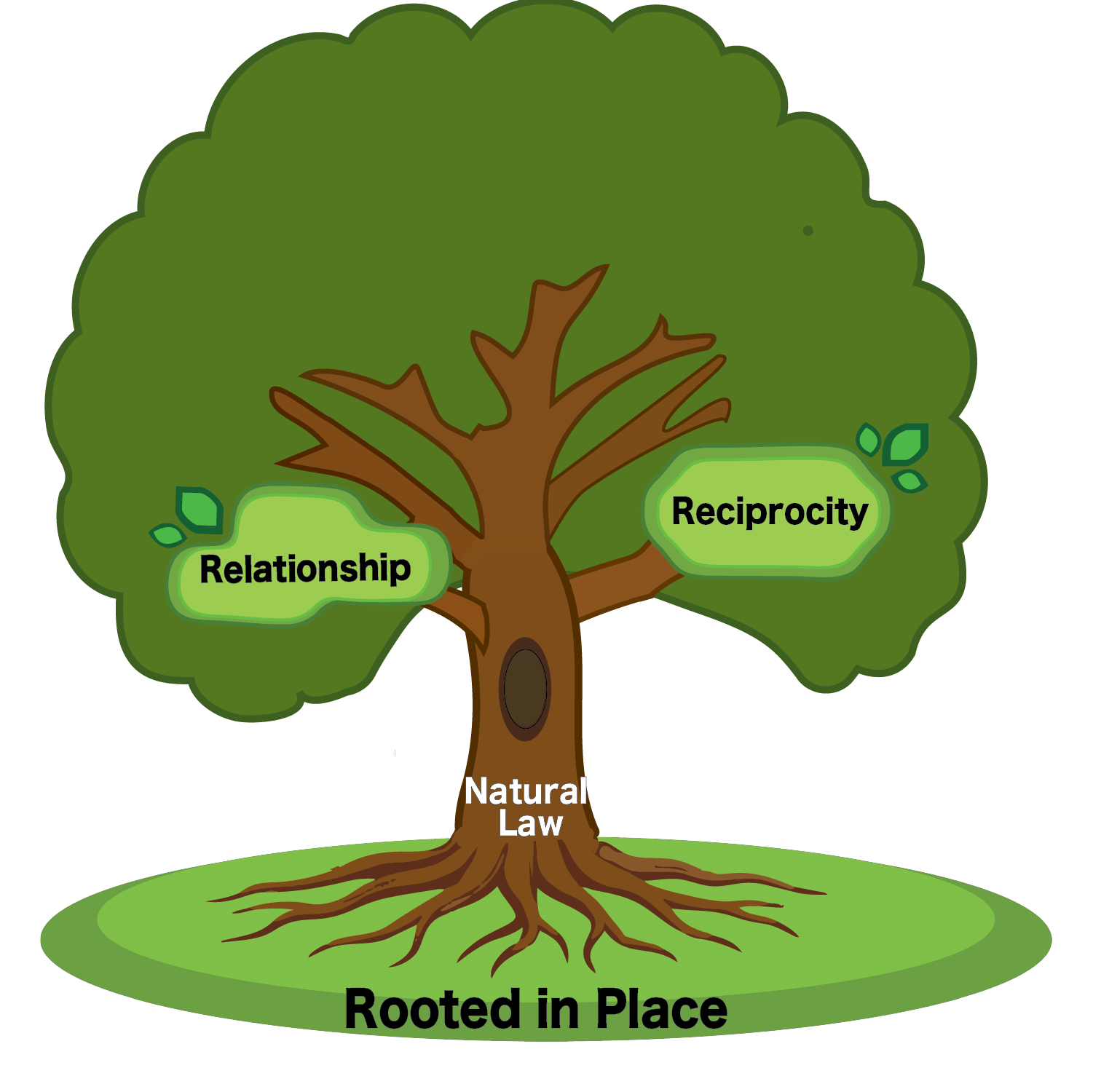
Through a Western scientific lens, when we learn about ecosystems, we are taught the concept of the survival of the fittest, learning that competitive relationships dominate and drive ecosystems and evolution. While competition exists in nature, there is an often-overlooked relationship you’ll find in any ecosystem: reciprocity. Indigenous science recognizes these reciprocal relationships, and we as humans learn from these reciprocal relationships and participate in them. If we receive gifts from the natural world, we must also give gifts back. If relationships are reciprocal, then they are inherently respectful.
Respect
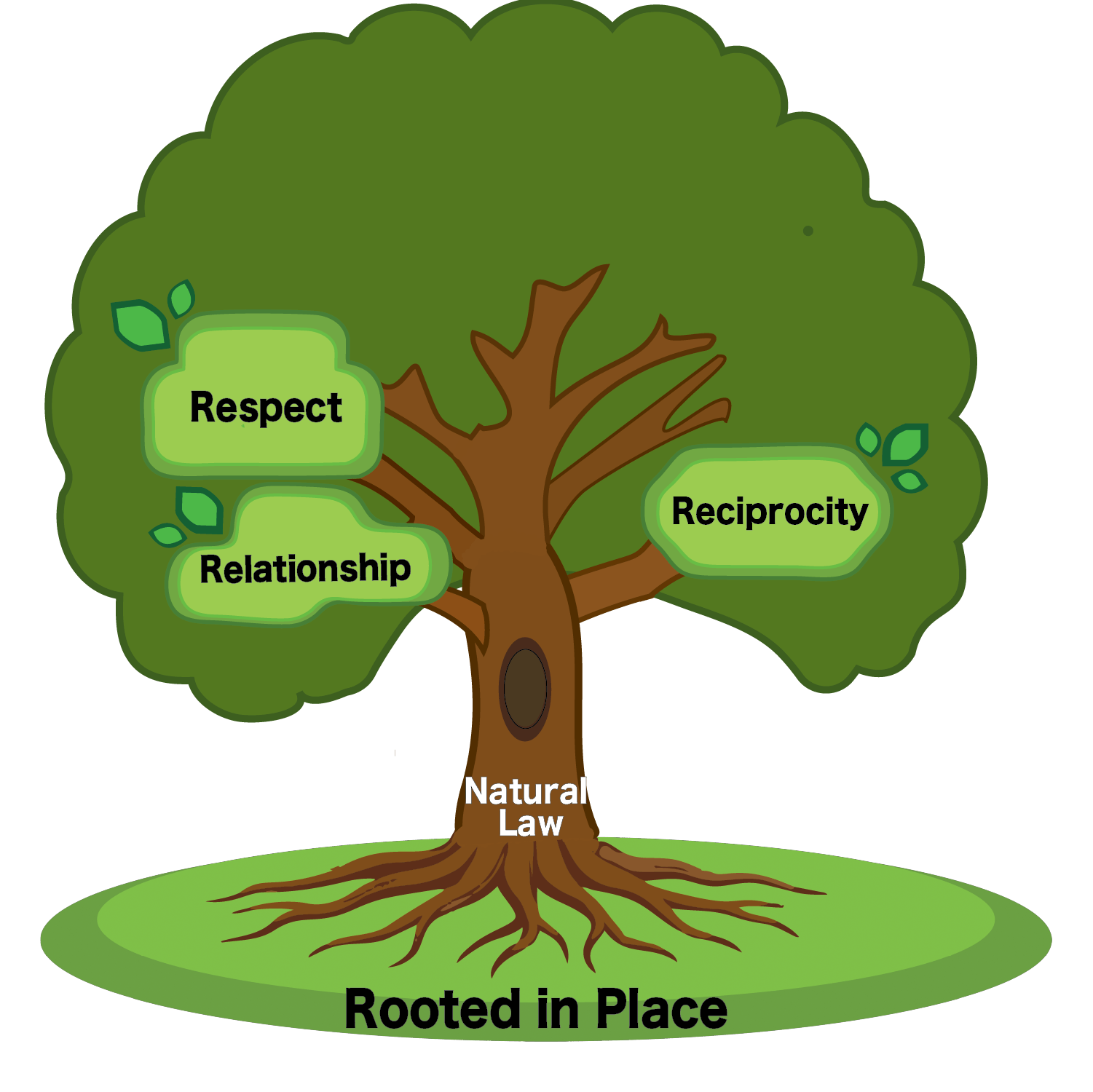
For Indigenous Peoples, this respect is reflected in how knowledge and science are applied and how research is conducted. There is the understanding that every being within a community (ecosystem) has countless relationships (ecology) and a responsibility (ecological niches) to play within their community. When we learn about these beings we understand and respect them for their gifts. This is reflected in how any natural gifts (natural resources) are taken from the land, which is always done with respect and reciprocity. The Anishinaabe language also reflects this worldview. Learning words in Anishinaabemowin (the language of the Anishinaabe) can be a powerful tool to understand the Anishinaabe worldview and, in turn, Indigenous science. But sometimes what’s not in the language can be just as powerful as what is in the language. For example, there is no direct word in Anishinaabemowin for what in English is called a “natural resource.”
A natural resource can be defined as a material taken from the environment that is useful to humans and has economic value. The economic value of a resource often determines its importance. But that concept does not align with the Anishinaabe (Indigenous) worldview, as there is no word for natural resource in Anishinaabemowin. That’s because from an Indigenous perspective, these beings are not resources, they are not mere materials of economic exploitation; they are our kin. A tree is not simply for timber, a fish is not simply for food, stone is not simply for structures. These are all beings with spirit, who deserve just as much respect and reciprocity as we would give to our fellow humans. They are our relatives and teachers who provide gifts and teachings that sustain our lives, and in turn, we must give back gifts in reciprocity. No matter the being and their gift, they are all seen as of equal importance. As human beings, we must take some or all of the gifts that these beings share with us to survive. If not done properly, this can lead to environmental degradation, destruction, and waste. To guide us on how much to take and how to take is humility.
Humility
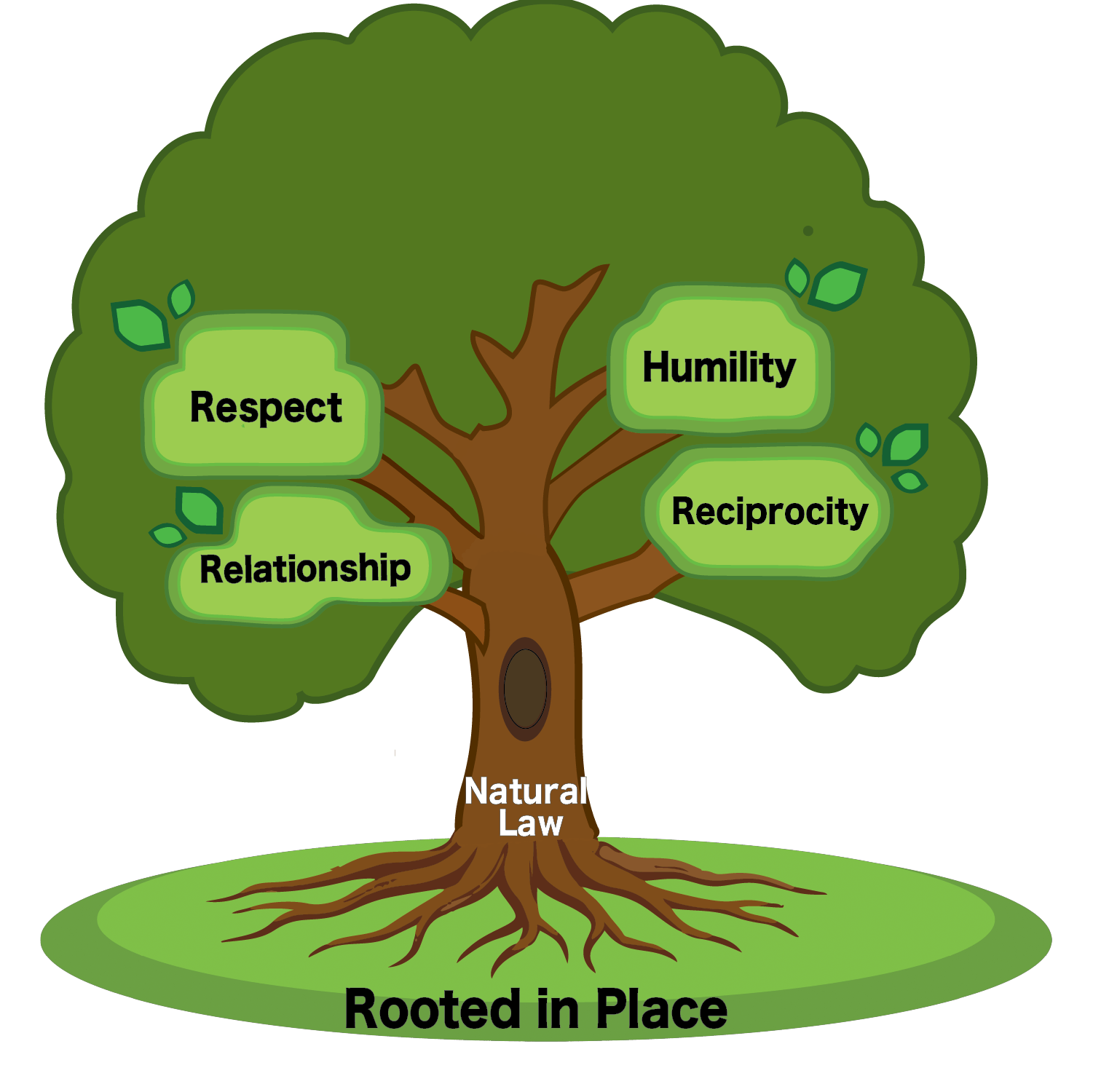
In English, humility is often understood as the absence of pride or boasting. But in Anishinaabemowin, the word for humility is dabaasendiziwin, which carries a deeper meaning. It means “to think lower of oneself in relation to all that sustains us.” This teaching causes us to reflect on and acknowledge that, as human beings, we are entirely dependent on the rest of creation (the environment). The plants, animals, waters, lands, etc… sustain our lives through sharing their gifts with us. If we approach science and natural resource extraction with humility, we honour those beings’ lives, taking only what we need, and not what we want. We acknowledge that we are the weakest of all creation, and that all the other beings need to support us. In that recognition, we have a responsibility to be respectful and reciprocal in our relationships with our kin.
Responsibility
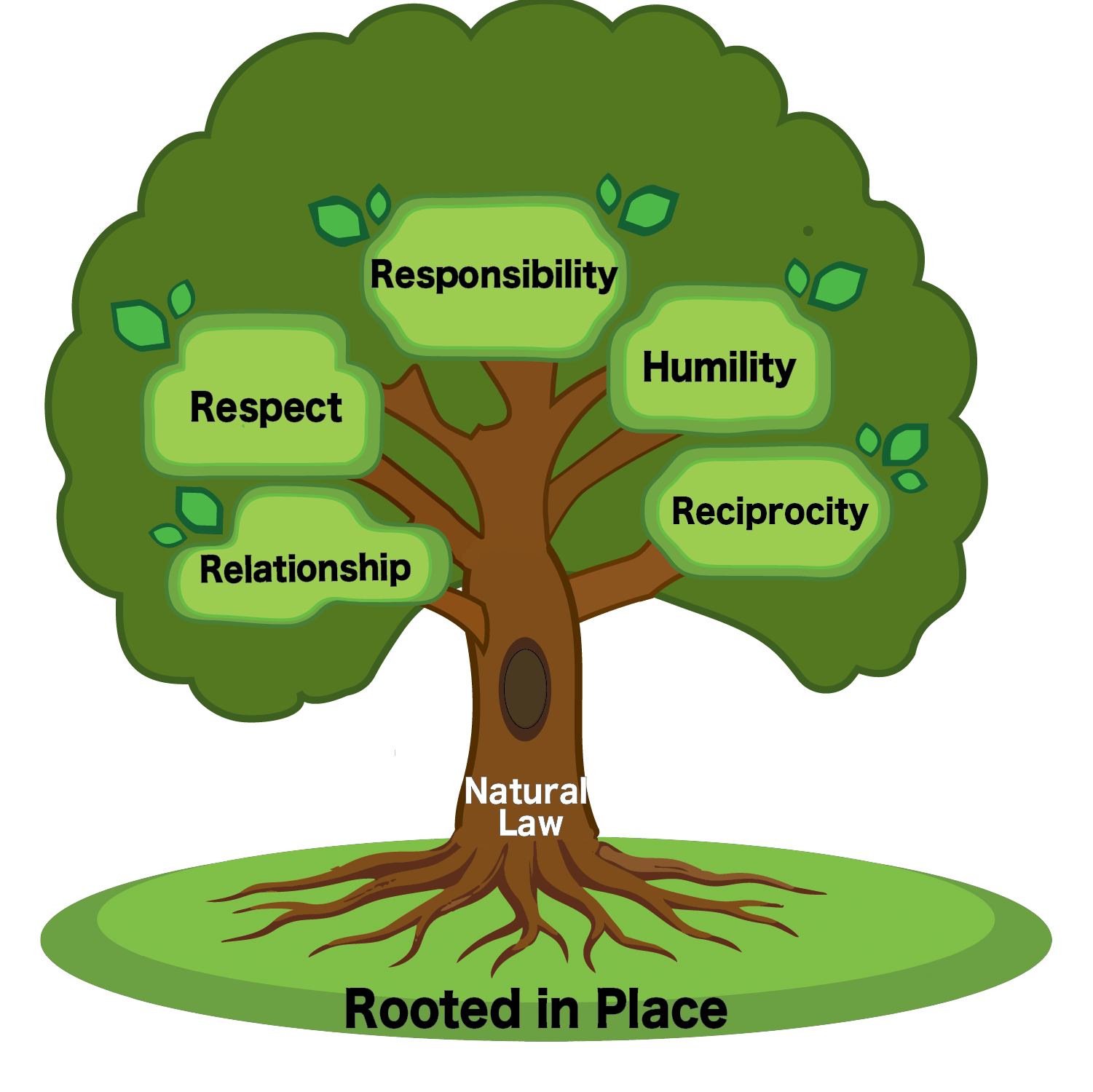
Indigenous science teaches that humans have a responsibility to live in accordance with Natural Law and to maintain balance within the world. In Anishinaabe teachings, we are taught that as humans, we are not the peak of creation, nor are we here to steward or save the Earth. Instead, we are beings with a unique gift: the ability to learn about all of creation and the relationships within creation. We have the ability to apply what we have learned to create technologies and engineer materials. But with this gift comes a responsibility. The knowledge we learn must be used in ways that not only benefit human beings but also benefit and support all beings. When we apply what we have learned, we must do so without causing environmental destruction or imbalance.
Sustainability
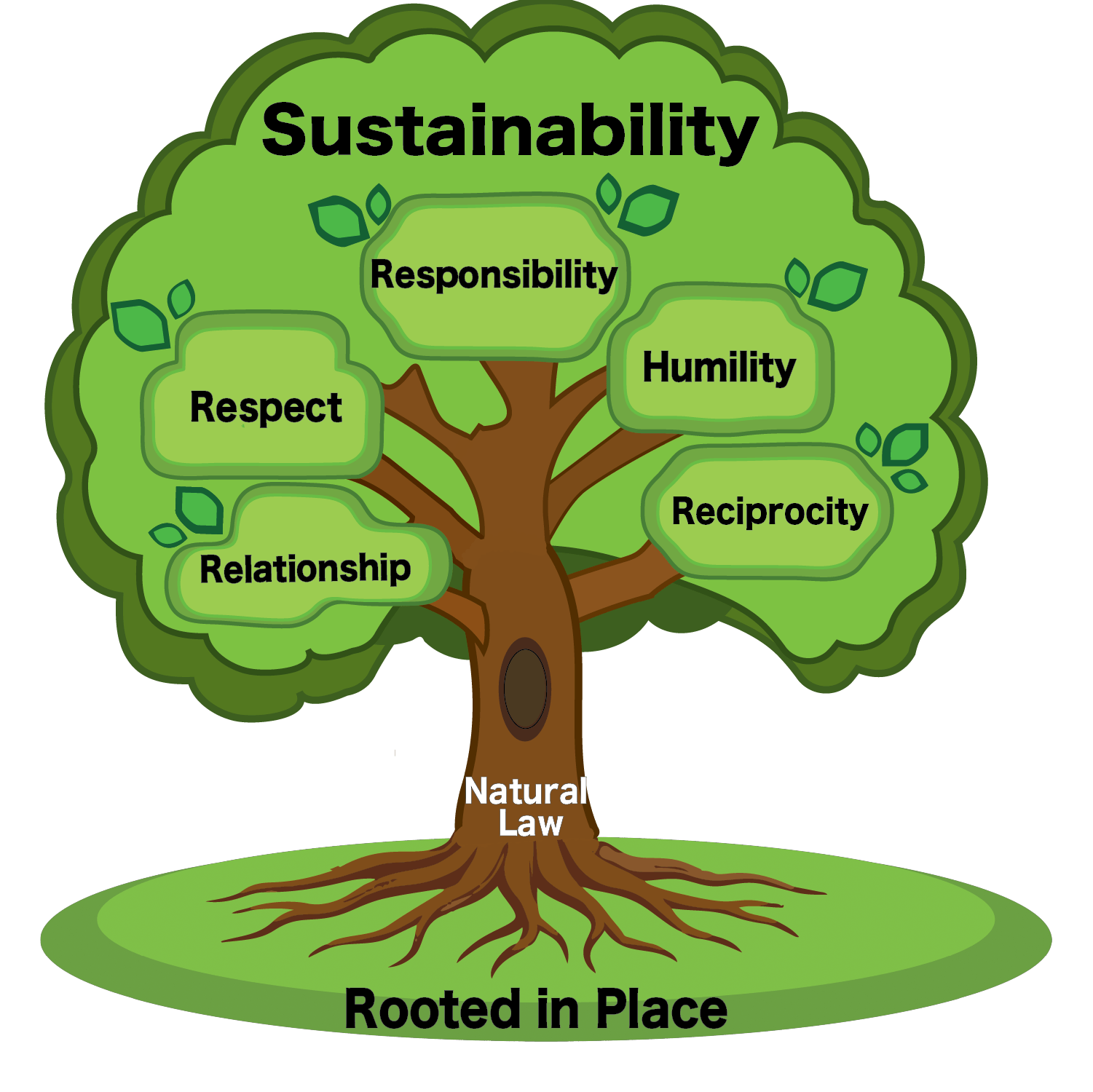
When we reflect on the concepts that inform Indigenous science: relationship, reciprocity, respect, humility, and responsibility, we recognize something significant. All these teachings and concepts relate closely to what today is described as sustainability.
In Western science and society, sustainability has only become a major focus in recent decades. Yet for Indigenous Peoples, sustainability has been embedded within knowledge systems, scientific practices, and day-to-day life since time immemorial.
The acronym STEM has been adapted to include Indigenous knowledge systems and is referred to as InSTEM.
However, this acronym is incomplete.
Western science can, and has, existed without sustainability, but Indigenous science cannot.
Since Indigenous science is inherently sustainable, a more fitting acronym that reflects the interwoven and interconnected nature of Indigenous scientific knowledge would be InSTEMS, with the last S standing for sustainability.
Defining Indigenous Science
Now that we have explored the concepts that inform Indigenous science and better understand what it is, we can ask another question: What is the definition of Indigenous science?
A Definition of Indigenous Science
Indigenous science is the multi-generational accumulation of an Indigenous Nation’s breadth and depth of understanding natural phenomena within their traditional homelands, encompassing biological, chemical, and physical knowledge. This understanding are acquired through learning from the land herself, from observing all the cycles of the natural world, and listening to and learning from the knowledge given to us from the many non-human beings that the land is shared with. This knowledge is rooted in the Indigenous circular worldview, which recognizes that everything is interconnected and part of a larger whole. Guided by Natural Law and the principles of relationship, reciprocity, respect, humility, and responsibility, Indigenous science is inherently sustainable. The purpose of Indigenous science is not only to acquire and apply that knowledge, but to be sustainable, to maintain balanced relationships with the land, and to ensure the well-being of future generations of all beings.
Another important topic within these teachings is to understand and distinguish the differences between Indigenous science and InSTEMS, and Traditional Ecological Knowledge (TEK), as these are often synonymous with each other, but should not be confused with each other.
What is TEK?
Indigenous science lends itself particularly well to the study of life, the environment, and the Earth system, which, in Western science, are defined as life and environmental sciences. This is because understanding the environment and the beings within the environment has always been part of everyday life for Indigenous Peoples. Through thousands of years, and hundreds of generations, Indigenous Peoples have observed, walked, listened and learned from the lands and waters, and all the beings of the lands and waters. It is this knowledge gained through observation, lived experience, and long-term relationships with the land and beings of the land that allowed Indigenous Peoples to develop a vast understanding of ecological knowledge. This deep environmental understanding has persisted long before Western science established disciplines such as ecology or environmental science. This extensive body of environmental knowledge can be summarized with the term Traditional Ecological Knowledge (TEK), and this is the most common term found in academic literature.
A definition of Traditional Ecological Knowledge (TEK)
Traditional Ecological Knowledge (TEK) is the term commonly used to describe the cumulative body of environmental knowledge of the traditional homelands of an Indigenous Nation. This knowledge reflects generations of observation, interaction, and relationship with the land, waters, and the many beings who live within those places. It includes names given to each being within their environment. These names speak to a being’s role and responsibility (ecological niche), a unique characteristic, their relationship to another being, or our relationship with that being. TEK also includes understandings of seasonal changes, reciprocal relationships, ecological patterns, and the interconnected roles that different beings play within their communities (ecosystems).
However, the word ‘traditional’ within TEK can sometimes create misunderstandings. It may lead some to assume that this knowledge belongs in the past, is outdated and is no longer relevant to the present, or can’t be used in the future.
In reality, the opposite is true.
While this knowledge has been passed down through many generations, it is not frozen in time. Indigenous knowledge systems, much like Western science, are dynamic and continually evolving. As new observations are made and new experiences are gained, knowledge is refined, understandings deepen, and teachings are adapted for future generations.
Western science is never static; it changes and adapts as continuous studies are conducted and new insights emerge. The same is true for Indigenous science and TEK.
For this reason, TEK should not be understood as historical knowledge alone. It is living knowledge about the environment, knowledge that continues to grow through ongoing relationships with the land, the waters, and the beings who live within them.
Perhaps a better term that captures the spirit of TEK but better reflects it is ‘Place-based Indigenous Ecological Knowledge’ (PIEK), pronounced peak.
TEK, One Part of a Larger Interconnected Science
It is important to recognize that TEK represents only one part of Indigenous science, which focuses specifically on ecological relationships and environmental understanding. Indigenous science encompasses TEK (or PIEK), astronomical understandings, mathematics, engineering, numerous types of technologies, stewardship practises, agricultural innovations, and much much more.
Which Science Should I Use?
After gaining an understanding of Indigenous science, you may wonder which science to use, as many educators, professionals, and students ask me after I’ve taught them about it.
So, should we rely on Western science or Indigenous science?
My answer is simple: why choose one over the other?
It does not have to be “this or that,” it should be “this and that.” That is the whole idea of Two-Eyed seeing: using an eye of Indigenous knowledge or science and an eye of Western knowledge or science to see a picture or problem with greater clarity.
Western and Indigenous science do not have to be combative; in fact, when you understand both, you realize they are complementary.
The gaps in Western Science are filled by Indigenous science, and vice versa.

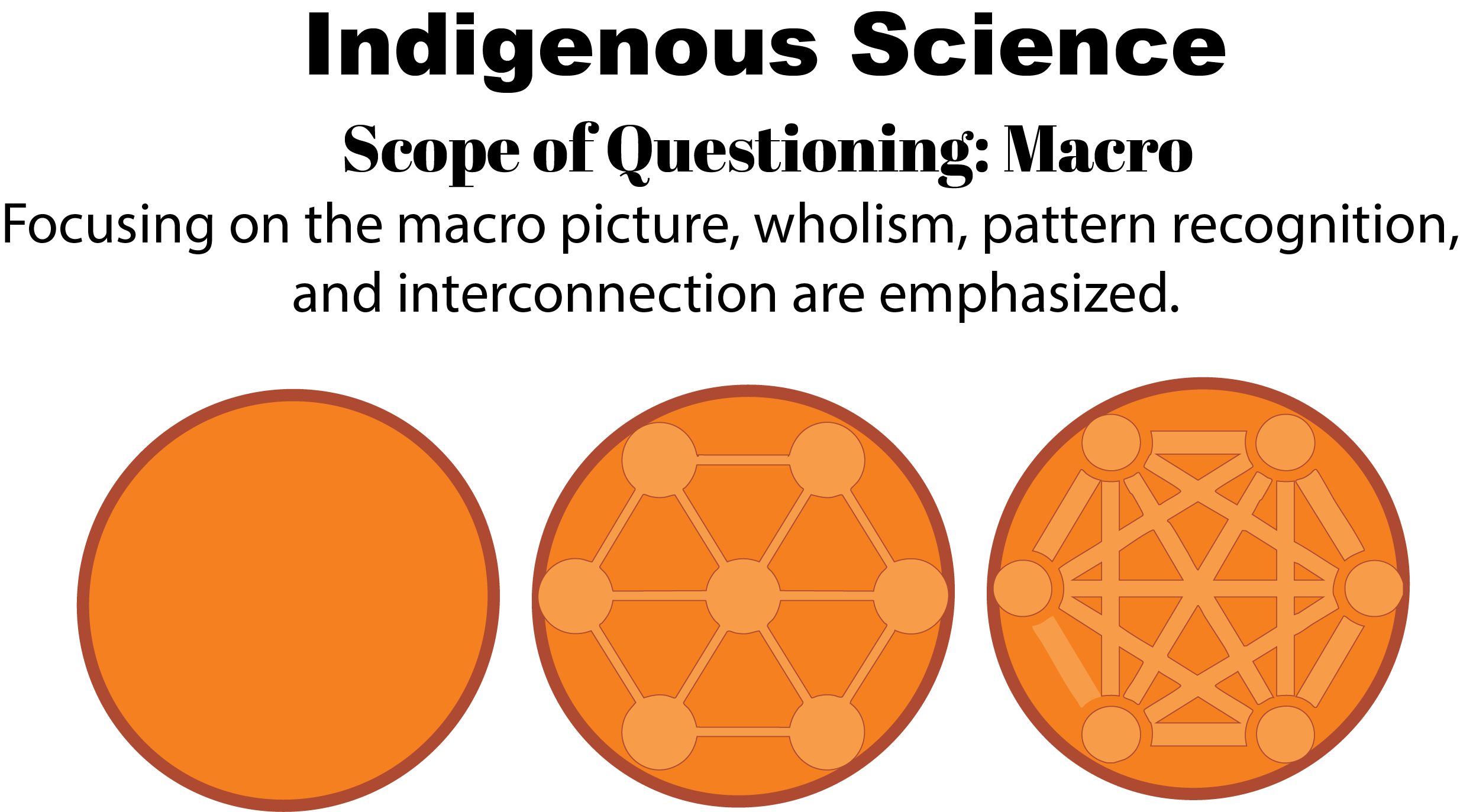
As a general example, Western science tends to focus on the micro-picture. Breaking complex systems into smaller parts and understanding phenomena through separation and categorization. It often seeks and asks increasingly specific questions. This reductionist approach can and has led to powerful insights, but may overlook the broader context.
Indigenous science, by contrast, often focuses on the macro-picture. It emphasizes holism, pattern recognition, and interconnection. Rather than isolating variables or creating sub-disciplines, it considers how everything is related. The goal is not just to analyze and answer one narrow and focused question, but to see the full system as well as understand our place within it.
.
When we utilize both Western and Indigenous science to approach a problem, we take a step forward to analyze the details, and take a step back to look at the bigger interconnected picture. This approach can benefit all scientists, regardless of their chosen discipline.
While Western science has provided many answers regarding natural phenomena and produced technologies and engineering advancements that have shaped modern society, it does have gaps. Not always able to provide a complete picture of the natural world or what is being studied. But when Indigenous science is introduced and used alongside Western science, it helps to fill in those gaps by emphasizing relationships, interconnectedness, sustainability, and our responsibilities to the environment.
If you enjoyed learning about Indigenous science (InSTEMs), this and many other topics are explored within the Seven Seeds Indigenous Foundations Course, which is open for registration. Find out more about this Introductory Indigenous course here by clicking on the button below: